Luxury Watches: Understanding Value, Tiers & the Market
What Actually Makes a Watch ‘Luxury’
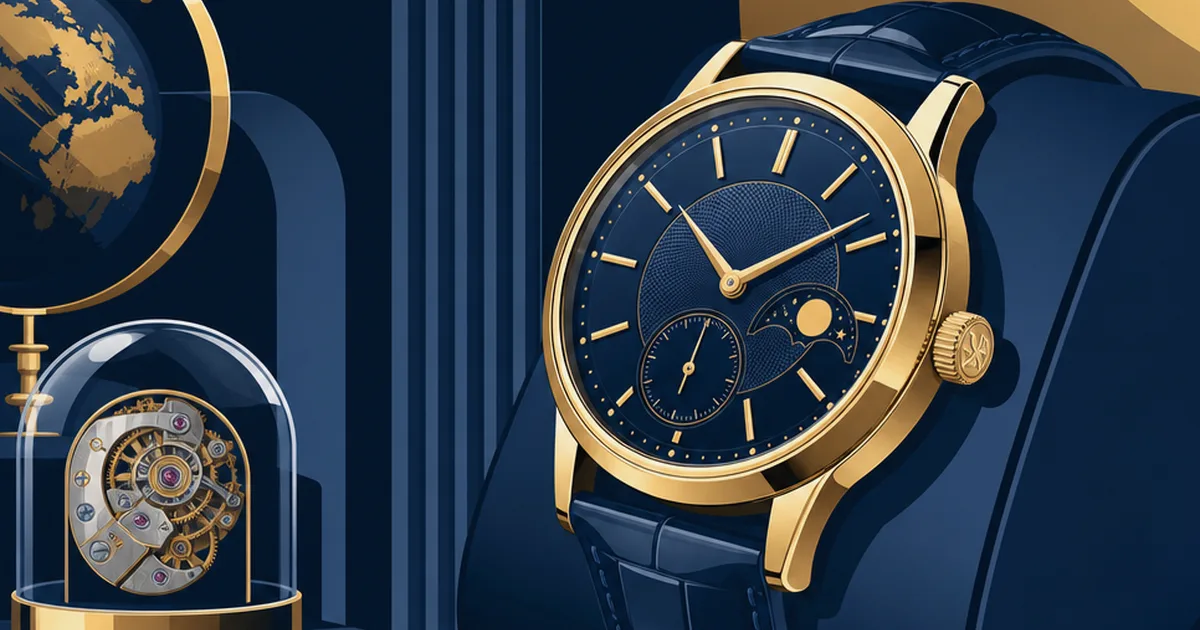
“Luxury” is one of the most overused words in watches, applied to everything from genuine haute horlogerie to fashion pieces with a high price tag. A useful definition strips away the marketing: a luxury watch is one whose price is justified by real craft — quality movements, meticulous finishing, durable precious or high-grade materials — and sustained by genuine demand, not merely by advertising. Price alone does not make a watch luxurious; a costly fashion watch is still a fashion watch.
The clearest signal of true luxury is what happens on the secondary market. Genuine luxury watches from respected houses hold a meaningful share of their value and, for the most desirable references, can trade near or above retail. A “luxury” watch that loses most of its value the moment it leaves the boutique was priced by marketing, not by the market.
What Drives Luxury Watch Values
Several forces set the price of a luxury watch, and they interact. Brand sits at the centre, carrying history and demand. Scarcity — whether by deliberate limited production or simple popularity outstripping supply — pushes prices up, sometimes dramatically. Materials matter (precious metals, high-tech ceramics, sapphire), as does the complexity and finishing of the movement. And condition, completeness, and provenance govern value on the secondary market just as they do for any collectible.
The desirability multiplier
- Iconic references: certain models transcend specification and become cultural objects.
- Waitlists: when demand vastly exceeds supply at retail, secondary prices rise above list.
- Limited editions: genuine scarcity can support premiums — but manufactured ‘limited’ runs may not.
- Provenance and full sets: box, papers, and history lift value and liquidity.
Retail, Waitlists, and the Secondary Market
One of the most confusing features of the modern luxury-watch market is that the most desirable pieces are often impossible to buy at retail. Authorised dealers maintain long waitlists for the hottest references, and buyers frequently turn to the secondary market, where prices for those same watches can sit well above the official retail price. Meanwhile, many other luxury watches are readily available and trade below retail second-hand.
Understanding this two-tier reality protects your wallet. Paying a large premium over retail for a hyped reference is a choice, not a necessity — and premiums can evaporate when sentiment shifts, as recent market cooling has shown. Conversely, buying an excellent, less-hyped luxury watch on the secondary market can deliver enormous value: the same craft and materials for a fraction of the boutique price.
Market heat is cyclical. Prices for the most speculative references have swung sharply in both directions. Buy the watch you want to own for its own sake, and treat any premium as a cost you’re consciously choosing to pay.
How to Buy a Luxury Watch Without Overpaying
The disciplined buyer separates the watch from the hype. Decide what you genuinely want — the design, the size, the complication, the feel on the wrist — rather than chasing whatever is trending. Then research real transaction prices, not asking prices, so you know what the market actually pays. For anything bought second-hand, insist on authentication, full sets where possible, and a reputable seller with recourse.
Practical rules
- Research completed sale prices to establish true market value before you buy.
- Don’t pay a hype premium unless you’re happy to own the watch regardless of resale.
- Prefer full sets and authenticated pieces from reputable sources.
- Consider excellent lower-profile references for the best craft-per-pound value.
A luxury watch bought thoughtfully is a lasting pleasure and a reasonable store of value; one bought in the heat of a trend can be an expensive lesson. Patience and knowledge, as ever, are the collector’s advantage.
Collector's notes
- True luxury is justified by craft and sustained demand — not price or advertising alone.
- Value is driven by brand, scarcity, materials, movement, condition, and provenance.
- The market is two-tier: hyped references trade above retail; many others below it.
- Market heat is cyclical — don’t pay a premium you’re not happy to absorb.
- Research real transaction prices, favour full sets, and buy the watch, not the hype.